Charlotte center city development pipeline targets $2.4 billion by 2027 as office demand stabilizes
A new construction wave takes shape across Uptown, South End and Midtown
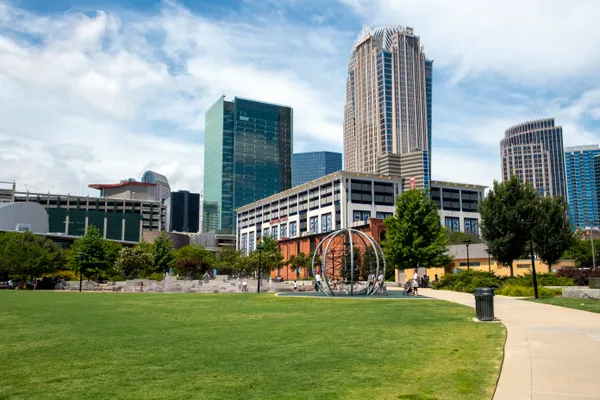
Charlotte’s center city is positioned for a $2.4 billion round of new construction activity expected to start or be underway by 2027, spanning Uptown, South End and Midtown. The current pipeline totals 4,866 apartment units, about 1.246 million square feet of office space, 1,501 hotel rooms and roughly 257,045 square feet of planned storefront and retail space.
The new-build figure is separate from additional investment tied to renovations, conversions and repositioning of existing assets, which are being tracked as a parallel reinvestment trend. Recent large-dollar examples include continued work connected to Bank of America Stadium renovations and a major conversion of the former Duke Energy headquarters property into apartments.
Pipeline has cooled from earlier peaks, but remains large by historical standards
Measured year over year, the center-city development pipeline has moderated from the elevated levels seen earlier in the decade. Tracking of projects under construction or expected to break ground showed totals of $6.9 billion in 2023, $4.2 billion in 2024 and $3.7 billion in 2025. The current $2.4 billion new construction estimate reflects the next stage of projects expected to begin or be active through 2027.
Market conditions have influenced the pace of new starts, including the higher-cost environment for financing and construction. In multifamily, supply delivered in recent years has contributed to a slower construction cadence and intensified competition among landlords, including the use of concessions in parts of the market.
Office market signals: utilization improves while older buildings face pressure
Center-city office dynamics show both improvement and continued challenge. Office occupancy patterns have strengthened as more employers have increased in-person expectations, and the frequency of employees working at least three days per week in center-city offices has moved closer to pre-pandemic levels in recent tracking.
At the same time, vacancy remains elevated in parts of the market, particularly in older buildings. Newer post-2000 office properties have been performing more strongly than pre-2000 inventory, accelerating a trend in which owners pursue upgrades, amenity additions, or adaptive reuse strategies to compete.
Projects to watch: Queensbridge Collective and additional mixed-use districts
One of the most prominent center-city projects is Queensbridge Collective, a major mixed-use development designed to connect Uptown and South End. The project’s next phase advanced in 2025 after an anchor office lease was secured for a second tower, enabling financing and a construction start with a targeted completion timeline extending into 2028.
Beyond individual towers, several large-scale districts remain central to longer-range growth expectations, including the Iron District, the North Tryon Tech Hub area and plans associated with Charlotte Gateway Station.
- Pipeline through 2027 includes apartments, office space, hotel rooms and retail storefronts.
- New construction estimates are separate from major renovations and conversions of existing buildings.
- Office leasing and utilization are improving, while older inventory is increasingly targeted for repositioning.
Development activity is increasingly split between new construction and reinvestment in older buildings, reflecting the market’s shift toward mixed-use districts and adaptive reuse.