Charlotte expands pollinator gardens through city landscaping, Bee City USA commitments, and public education events
A city-managed approach to habitat in everyday public spaces
Charlotte has expanded its use of pollinator gardens across city-owned property and public infrastructure, positioning the plantings as part of routine landscape management rather than standalone beautification projects. The city’s Landscape Management team began installing pollinator-focused natural areas in 2017 after a request tied to Old City Hall and has since extended that model to additional locations.
City-installed gardens have appeared in multiple settings, including the Third Ward area, Elmwood Cemetery and along public transit infrastructure such as LYNX Blue Line stations. City departments beyond Landscape Management have also participated, including Charlotte Area Transit System and Aviation, reflecting a cross-department approach to incorporating pollinator habitat into standard grounds maintenance.
Bee City USA designation formalized city commitments in 2023
On March 13, 2023, Charlotte City Council adopted a resolution designating Charlotte as a Bee City USA affiliate. The designation is housed through the city’s Keep Charlotte Beautiful program and is structured around a set of ongoing activities aimed at pollinator conservation, public education and habitat expansion.
Planned and ongoing commitments tied to the designation include public outreach about pollinators, hosting education events and habitat plantings, developing recommended native plant lists, creating or expanding pollinator-friendly habitats, and identifying potential improvements to pest management practices as they relate to pollinator conservation.
Connecting pollinator habitat to Charlotte’s broader urban forestry work
Charlotte’s pollinator gardens have been described by city staff as complementary to the city’s broader tree and landscape responsibilities, which include pruning and planting in rights-of-way and at city facilities. City arborist officials have said Charlotte’s tree canopy coverage is about 46% to 47%, while Landscape Management estimates it maintains as many as 300,000 trees and typically plants about 700 to 1,000 trees annually.
Within that context, pollinator gardens are being framed as habitat restoration projects that can support bees, butterflies and other pollinators affected by habitat loss, invasive or non-native species pressures, climate change and pesticide exposure linked to traditional landscape approaches. City staff have also noted that pollinator gardens may appear less formal than conventional municipal landscaping, reflecting differences in design goals and maintenance expectations.
Public events and resident participation: workshops, giveaways, and citizen science
Charlotte has paired its on-the-ground plantings with public-facing programming. In June 2025, the city scheduled a series of free events tied to Pollinator Month, including workshops and guided activities intended to build awareness of pollinators’ role in local ecosystems.
Pollinator Week programming in June has included hands-on learning events and community gardening days.
Some events have offered residents free native plants, with structured registration and time slots.
Charlotte has also hosted programming connected to the Great Southeastern Pollinator Census, using a timed observation-and-tally format designed for public participation.
Pollinator gardens are being integrated into city landscaping as both habitat projects and public learning sites, extending from civic buildings to transit corridors.
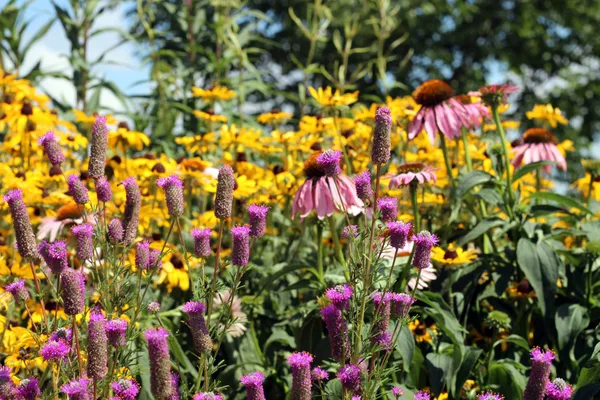
City guidance to residents has emphasized native nectar- and pollen-producing plants commonly used in beginner pollinator gardens, including coneflower, black-eyed Susan, coreopsis, bee balm, milkweed and liatris, alongside seasonal planting advice that favors fall establishment with early spring as an alternative.