Charlotte Protesters Cite Constitutional Rights as ‘No Kings’ Demonstrations Expand Into Repeated, Multi-Stop Participation
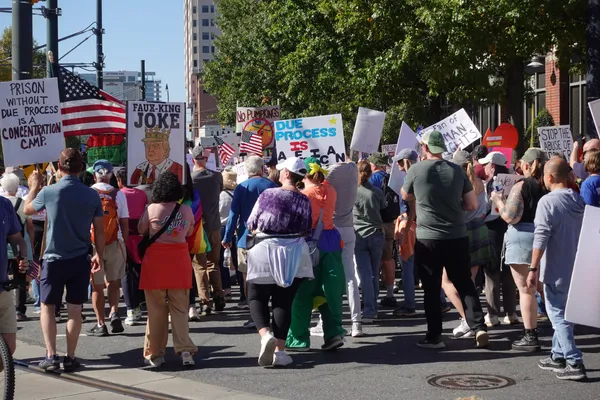
A local protest footprint inside a broader national mobilization
Charlotte has become one of the recurring hubs for the “No Kings” protest movement, with participants turning out for marches and rallies that have taken place on multiple dates and in multiple nearby communities. The demonstrations have drawn a mix of first-time attendees and repeat participants who travel between events, reflecting an organizing model built around concurrent actions rather than a single centralized march.
In Charlotte, a focal point for earlier demonstrations was First Ward Park, where organizers said crowds reached into the thousands before moving through Uptown. Additional gatherings were reported across the wider region, including suburban and exurban communities that often host separate rallies on the same day.
What protesters say they are defending
A consistent theme across Charlotte-area events has been the framing of protest participation as a defense of constitutional governance and civil liberties. Interviewed participants have described their motivation in terms of separation of powers, congressional oversight, and protections for speech and protest. The phrase “I still believe in the Constitution” has appeared as both a personal statement and a shorthand for the movement’s broader emphasis on institutional limits on executive power.
Signage and chants at Charlotte-area rallies have commonly invoked the nation’s founding documents and the country’s rejection of monarchy. While the demonstrations include a wide range of policy concerns, the constitutional framing has remained a unifying element across different venues and protest dates.
Issues driving turnout: immigration enforcement, war, and civil rights
Nationally, the current wave of “No Kings” demonstrations has been organized amid disputes over federal immigration enforcement tactics and broader questions about the scope of presidential authority. Immigration actions have been a central driver of protest energy, particularly in cities where residents report heightened enforcement activity. Participants have also cited concerns related to war abroad and federal policy changes affecting transgender rights.
Organizers have promoted the events as a large-scale, nonviolent day of action, with demonstrations registered across all 50 states and additional rallies planned outside the United States.
How repeated attendance fits the movement’s structure
The movement’s design encourages parallel protests and repeat engagement. Rather than concentrating participation into one march, organizers have emphasized dispersed gatherings that can recur across months, allowing participants to attend multiple events and to travel between nearby rallies in a single day. This structure helps explain why some Charlotte-area attendees report going to more than one “No Kings” protest, or combining an Uptown march with additional stops in surrounding towns.
Key facts at a glance
- Charlotte-area “No Kings” events have included rallies in Uptown and in nearby communities across the region.
- First Ward Park has served as a central gathering point for major Charlotte marches.
- Participants have repeatedly framed their involvement around constitutional protections and limits on executive power.
- National protest themes have included immigration enforcement, war-related concerns, and civil-rights issues.
In interviews at Charlotte-area events, participants have repeatedly described their presence as rooted in constitutional concerns and the belief that no leader should exercise monarchical power.