Extreme drought returns to Charlotte area after 17 years, raising water-supply and wildfire risk concerns
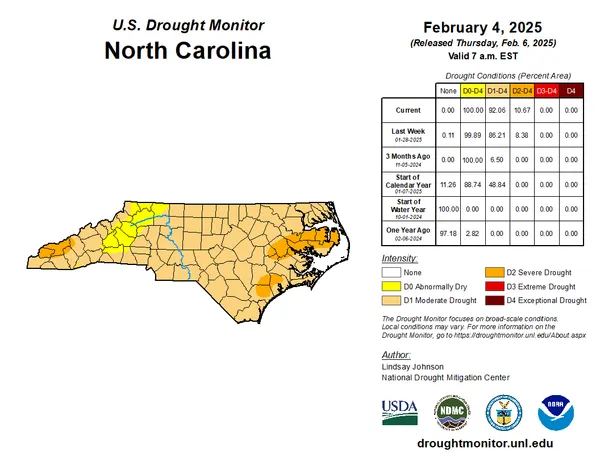
Extreme drought classification reappears in Mecklenburg County
Parts of the Charlotte region have returned to an “extreme drought” classification for the first time since 2008, marking a shift from the more typical winter pattern in which water-demand pressures ease but hydrologic deficits can quietly deepen. The designation reflects a combination of precipitation shortfalls and indicators tied to streamflow, soil moisture and reservoir conditions.
In Mecklenburg County, drought conditions are affecting the entire population, and recent climate summaries show January 2026 ranked as the county’s third-driest January on record, with precipitation nearly three inches below normal. Across North Carolina, drought coverage has expanded in recent weeks, with large areas in the Piedmont and western counties falling into higher-intensity drought categories.
What “extreme drought” means in practice
Drought categories used in federal and state monitoring frameworks range from “abnormally dry” through “exceptional drought.” “Extreme drought” is associated with widespread water shortages or restrictions, heightened fire danger, and major stress on agriculture and ecosystems. Even during winter, officials note that soils, streams and lakes can remain well below normal, which may set the stage for sharper impacts if dry conditions continue into spring and summer.
Winter storms can add visible snow and ice, but drought assessment depends on longer-term water balance and how much liquid water ultimately reaches soils, streams and reservoirs.
Regional water system context: Catawba-Wateree basin under watch
Charlotte’s primary water sources are tied to the broader Catawba-Wateree River Basin, a multi-county system that supports more than two million residents across the Carolinas. Basin managers track inflows, lake levels and other indicators through a staged protocol designed to coordinate drought response among large water users and utilities.
In late 2025, basin indicators reached a “watch” stage that emphasizes communication and readiness. The protocol includes escalating stages—moving from watch conditions toward emergency operations—based on a defined set of hydrologic triggers.
Key drivers and measurable signals
Rainfall deficits: Multiple monitoring products show below-normal precipitation over recent months in the Charlotte area and statewide.
Soil and stream impacts: Dry soils reduce runoff efficiency, meaning brief or frozen precipitation events may not translate into improved streamflow.
Reservoir and basin indicators: Lake and inflow metrics are evaluated alongside weather and water-demand patterns to determine drought stage and response needs.
What residents and utilities may face next
State drought advisories encourage water systems in affected areas to implement water-shortage response plans, while local measures can range from voluntary conservation messaging to mandatory outdoor watering limits if conditions worsen. In previous drought watch periods in the Charlotte region, public guidance has focused on reducing nonessential outdoor use, limiting car washing, and avoiding unnecessary water waste.
With the region now in an extreme drought classification, the near-term trajectory will depend on sustained, soaking rainfall and how quickly water returns to streams and reservoirs—factors that typically become more consequential as temperatures rise and seasonal demand increases.