Measles cases rise in the Carolinas, prompting questions about Charlotte’s outbreak risk and preparedness
Regional spike puts focus on vaccination gaps and travel-driven spread
Measles activity in the Carolinas has accelerated since late 2025, driven by a large outbreak in South Carolina and a smaller but growing number of connected cases in North Carolina. The situation has raised public-health questions in the Charlotte region, where routine travel and commuting patterns link Mecklenburg County to surrounding counties and to Upstate South Carolina.
South Carolina’s outbreak was confirmed in early October 2025 and, as of Feb. 3, 2026, had reached 876 reported cases, centered around Spartanburg County. State health officials have also described multiple public exposure locations, an indicator that transmission is occurring beyond household or close-contact settings.
North Carolina cases tied to the South Carolina outbreak
North Carolina health officials have reported measles cases since late December, including cases identified in Rutherford County and in unvaccinated siblings in Buncombe County. As of Jan. 15, 2026, North Carolina had reported seven cases since late December, and officials said the Buncombe County cases were connected to the South Carolina outbreak. North Carolina has also reported individual exposure investigations in multiple counties since mid-December.
In practical terms for Charlotte-area residents, these updates matter because measles is among the most contagious respiratory viruses. Public-health guidance notes that the virus spreads through the air and can remain in an airspace for up to two hours after an infectious person leaves, increasing the likelihood of exposure in crowded indoor settings.
What determines whether Charlotte could see a larger outbreak
The key factor in whether sporadic exposures become sustained local spread is immunity levels in the community. Public-health agencies generally use a benchmark of about 95% vaccination coverage to reduce the likelihood of outbreaks. North Carolina’s reported MMR vaccination rate for kindergartners was 93.8% for the 2023–2024 school year, with lower rates in some counties and schools—conditions that can allow rapid spread if the virus is introduced into a pocket of under-immunized people.
What residents can verify now: vaccine status, symptoms, and response steps
Vaccination effectiveness: Two doses of the MMR vaccine are about 97% effective at preventing measles; one dose is about 93% effective.
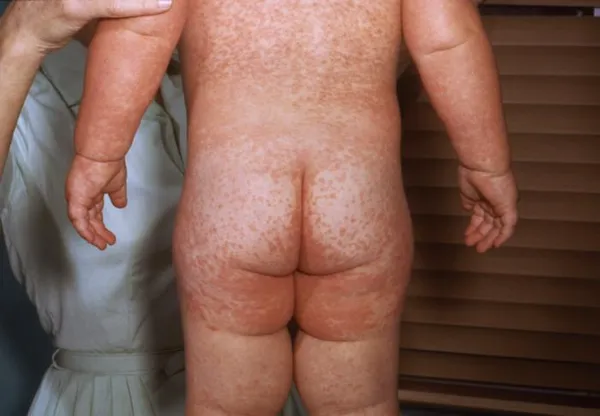
Early symptoms: Illness typically begins with fever and respiratory symptoms (such as cough and runny nose), followed by a rash.
What to do after exposure: Health guidance emphasizes contacting a healthcare provider promptly if exposure is suspected, particularly for unvaccinated people, infants too young for routine vaccination, and those with medical conditions affecting immunity.
Measles outbreaks often expand fastest where unvaccinated people are clustered, while highly vaccinated communities are more likely to see isolated cases rather than sustained spread.
For the Charlotte region, the current trajectory in the Carolinas suggests that the immediate risk is driven less by geography alone and more by local vaccination coverage, the speed of case identification, and whether exposures occur in settings with low immunity.