Sustain Charlotte urges alternatives and pause as I-77 South express toll lanes move toward procurement
A widening plan enters a critical decision window
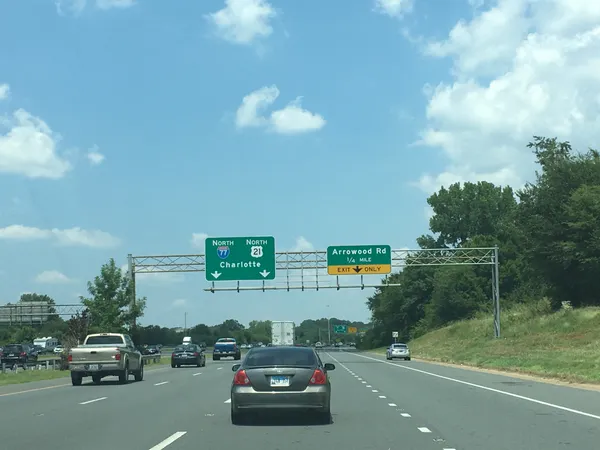
A debate over the future of Interstate 77 south of Uptown is intensifying as state transportation officials advance a proposal to add managed toll lanes along roughly 11 miles of the corridor, from the South Carolina state line to the I-277/N.C. 16 Brookshire Freeway connection.
The project has been framed by transportation planners as a congestion-management and safety initiative that would add two express lanes in each direction, rebuild bridges and interchanges, and create new access points to enter the tolled lanes. Plans discussed publicly also include pedestrian and bicycle improvements such as sidewalks, bike lanes, and shared-use paths within the corridor.
Sustain Charlotte’s position: reconsider scope and compare options
Sustain Charlotte, a local nonprofit focused on transportation, land use, and sustainability, has pressed elected officials to seek a pause in the procurement timeline and to require a more detailed, side-by-side comparison of alternatives before the state commits further resources. The organization’s founder and executive director, Shannon Binns, addressed Charlotte City Council in late February, describing opposition to the current approach and submitting a petition signed by nearly 1,300 residents.
In those remarks, Sustain Charlotte argued that residents and local officials did not receive sufficient information early enough in the process and said the region should consider strategies that reduce neighborhood harm while addressing mobility needs, including greater emphasis on transit and other non-highway investments.
How governance and approvals shape what happens next
Key decisions sit at the intersection of state project delivery and regional transportation governance. The Charlotte Regional Transportation Planning Organization (CRTPO) plays a central role because federal planning rules require large projects to be consistent with long-range plans and regional programming. In October 2024, CRTPO requested that the state move forward using a public-private partnership approach and formed a working group to help define priorities and contract terms.
Those priorities have included increasing transparency, providing transit benefits, and establishing toll rate caps intended to optimize the use of both tolled and general-purpose lanes.
State response: elevated design, extended listening period, and affordability programs
State transportation officials have said the project design remains preliminary—described as roughly 10–15% complete—with final design not expected until at least late 2027 and construction anticipated in the early 2030s. In early March, the state announced an extended community listening period running from March through June 2026, including additional small-group meetings and a community engagement center intended to provide project information and collect feedback.
State materials also describe a toll-discount program for qualifying low-income residents and toll-free use of the express lanes for carpools meeting occupancy requirements, public transit vehicles, and emergency responders.
Issues under scrutiny
Neighborhood impacts and displacement: State officials have emphasized an elevated design option as a way to reduce property impacts compared with traditional widening in several neighborhoods along the corridor and to avoid impacts to Pinewood Cemetery.
Cost and financing: The project’s price tag and how costs and revenues would be allocated under a public-private partnership remain focal points in public debate as procurement milestones approach.
Transit integration: The state has argued the lanes could support more reliable travel for transit vehicles; opponents question whether highway expansion will meet long-term mobility goals compared with direct transit investment.
With procurement steps scheduled to continue in 2026, the coming months are likely to determine whether the region stays on its current course or formally reopens the question of alternatives.
For residents, near-term developments center on CRTPO discussions, city and county policy positions, and the state’s engagement schedule as draft procurement materials are prepared.